
Rain Sensors for Florida Irrigation Systems: Why Your Palm Beach Property Needs One
Rain Sensors for Florida Irrigation Systems: Why Your Palm Beach Property Needs One
Rain Sensors for Florida Irrigation Systems: Why Your Palm Beach Property Needs One
The small device that can prevent unnecessary watering, protect your landscape and help reduce water waste
South Florida has no shortage of rain, especially during the summer months. A Palm Beach County property can receive substantial rainfall from a single afternoon thunderstorm. Yet many irrigation systems continue watering according to the same programmed schedule whether it has rained an inch—or not at all.
That creates an obvious question: Why water the landscape when nature has already done the job?
The answer is a properly installed and functioning rain sensor. A rain sensor is one of the simplest components of an irrigation system, but it can play an important role in responsible landscape management.
What Is a Rain Sensor?
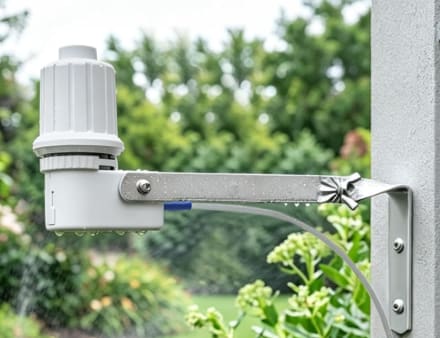
A rain sensor is a device connected to an automatic irrigation controller that detects rainfall and temporarily prevents the irrigation system from running when sufficient rain has occurred.
The controller may still be programmed to water at its normal time. But the rain sensor can effectively tell it: “Not today. We've already had enough.”
Once the sensor dries and the appropriate conditions are restored, the irrigation system can resume its programmed schedule.
The sensor does not replace the irrigation controller: it makes the controller responsive to the weather.
Without a functioning rain sensor, an irrigation system primarily follows its schedule. With one, the system can respond to an important environmental variable: actual rainfall.
Why Are Rain Sensors Important in Florida?
Florida regulations require rain shutoff technology on many automatic irrigation systems, subject to applicable exceptions and local requirements. But regulatory compliance is only part of the story.
For the homeowner, the real benefit is simple: Don't irrigate when the landscape has already received enough water.
Consider a typical Palm Beach summer day. Your irrigation system is programmed to run at 5:00 a.m. At 3:00 p.m., a thunderstorm moves across the property and drops a substantial amount of rain.
The soil is already wet. But the next morning, the irrigation controller doesn't know that.
Unless the system has a functioning rain sensor or another method of responding to rainfall, the sprinklers may turn on anyway.
Now the landscape receives: Rain + irrigation = unnecessary additional water.
And if this happens repeatedly throughout the rainy season, the amount of wasted water can become significant and the extra, unnecessary cost rises.
How Does a Rain Sensor Work?
Traditional rain sensors commonly use moisture-sensitive discs. As rain falls, the discs absorb moisture and expand. Once enough moisture has accumulated, the sensor activates a switch that interrupts the irrigation system. As the discs dry, they contract and the irrigation system is allowed to operate again.
Other systems use electronic or wireless sensing technologies, but the principle remains similar: Detect enough rainfall → suspend irrigation → allow the system to resume when conditions permit.
The sensor doesn't have to measure every drop of rain, it simply needs to determine whether enough rainfall has occurred to justify skipping or suspending an irrigation cycle.
A Rain Sensor Is a Weather-Based “Pause Button”
One way to think about a rain sensor is as a pause button for your irrigation system.
Your controller might say: “It's Tuesday. Water now.” The rain sensor can respond: “Yes, but it rained yesterday. Pause.”
This is particularly valuable in South Florida because rainfall can change dramatically from one day to the next. A landscape may require supplemental irrigation during one period and very little during another.
A fixed schedule cannot always account for that, but a functioning rain sensor provides this simple layer of intelligence that makes a big difference.
The Economic Benefit: Don't Pay to Replace Rain
Every irrigation cycle uses water. If your system operates unnecessarily after significant rainfall, you are effectively paying to put additional water onto a landscape that may not need it. For a small property, the savings from any single skipped cycle may be modest.
For a larger Palm Beach estate with:
- Extensive turf
- Multiple irrigation zones
- Large ornamental beds
- Mature hedges
- Numerous trees
- Extensive outdoor living areas
the cumulative water use can be much greater.
Avoiding unnecessary irrigation cycles can therefore help reduce water consumption and potentially lower operating costs.
There is also an indirect benefit: Less unnecessary operation means less unnecessary wear on irrigation equipment. Pumps, valves, sprinkler heads and other components don't need to operate when irrigation isn't required. A rain sensor isn't likely to transform your water bill overnight but, over an entire rainy season, repeatedly avoiding unnecessary irrigation can add up.
The Environmental Benefit
The environmental case is equally compelling. Florida's water resources are valuable. Using only the water a landscape actually needs reduces unnecessary demand on municipal and groundwater supplies.
It can also reduce:
- Water waste
- Irrigation runoff
- Nutrient movement through the soil
- Unnecessary fertilizer movement toward drainage systems and waterways
- Energy used to pump and distribute water
This is especially relevant in Florida's sandy soils, where excess irrigation can move water and soluble nutrients through the soil profile relatively quickly.
A rain sensor therefore isn't simply a convenience: it is a small but meaningful tool for responsible water management.
Overwatering Can Hurt the Landscape
The benefits of a rain sensor aren't limited to saving water. Preventing unnecessary irrigation can also help protect the landscape itself. Persistently saturated soil can reduce oxygen availability around roots and contribute to root stress. Excess moisture can also contribute to conditions favorable for certain plant diseases and can encourage moisture-loving weeds. And when roots are stressed, plants may become less efficient at absorbing water and nutrients.
This can create a frustrating cycle: Too much water → root stress → plant decline → more treatments → more water.
A rain sensor cannot solve every irrigation problem but it can prevent one of the simplest: watering when it has already rained.
A Rain Sensor Does Not Replace Proper Irrigation Management
This is extremely important. A rain sensor is a safety net, not a complete irrigation strategy. It can help stop watering after rainfall, but it cannot determine whether your irrigation schedule is appropriate for your property.
It won't necessarily know that:
- Your mature hedge requires less frequent irrigation than your turf.
- A newly planted shrub needs more attention during establishment.
- One zone has poor sprinkler coverage.
- A sprinkler head is broken.
- A valve is leaking.
- A particular area has drainage problems.
- Your lawn is receiving too much or too little water even when it hasn't rained.
That's why proper irrigation management requires considering: Rainfall + soil + plant type + root development + exposure + season + irrigation design. The rain sensor is one important piece of that puzzle.
Your Rain Sensor May Be There—and Still Not Be Working
This is something homeowners often overlook. We encounter irrigation systems where the rain sensor is:
- Missing
- Broken
- Disconnected
- Improperly installed
- Obstructed
- Set incorrectly
- Bypassed at the controller
Sometimes the sensor is physically present but has not been tested in years. Having a rain sensor is not the same as having a functioning rain sensor. Like any other component of an irrigation system, it should be inspected and tested periodically.
How Can You Tell If Your Rain Sensor Works?
The best approach is to have an irrigation professional verify that:
- The sensor is properly connected to the irrigation controller.
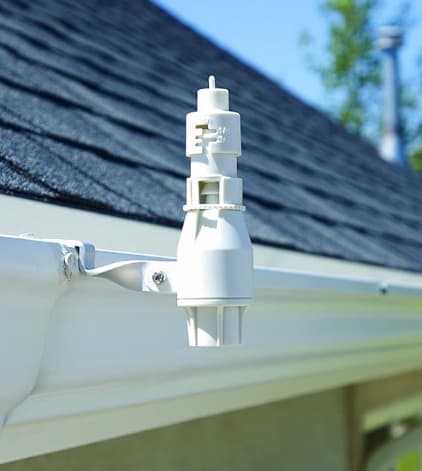
- It is installed in an appropriate location where it can accurately detect rainfall.
- Its rainfall threshold is appropriately adjusted.
- The controller recognizes the sensor.
- The irrigation system actually stops or skips a cycle when the sensor is triggered.
If you don't know whether your property has a rain sensor, that's worth finding out. And if you do have one, don't assume it works simply because it is mounted on the house: Test it !
Rain Sensor vs. Smart Irrigation Controller
Rain sensors are not the only technology available for improving irrigation efficiency. Modern smart irrigation controllers can incorporate additional information, such as weather conditions, evapotranspiration estimates and soil or moisture data, depending on the system. These technologies can provide more sophisticated irrigation management. But that doesn't make a rain sensor obsolete.
For many residential systems, a properly installed rain sensor remains a simple, practical and cost-effective way to prevent irrigation immediately following sufficient rainfall. Think of it as a basic layer of protection. Simple doesn't mean unimportant.
Your Irrigation System Should Work With Nature—Not Against It
The landscape doesn't know what day of the week it is. It doesn't know what time your irrigation controller is scheduled to start. It responds to: Water. Sun. Soil. Temperature. Roots. Rainfall.
The smartest irrigation strategy therefore isn't necessarily the one with the most complicated controller. It is the one that delivers the appropriate amount of water when the landscape actually needs it. A functioning rain sensor is one simple way to move your irrigation system in that direction.
The Bottom Line
If your Palm Beach County property has an automatic irrigation system, make sure you know:
Does it have a rain shutoff device?
Is it properly installed?
Is it connected?
Is it adjusted correctly?
And most importantly—does it actually work?
A rain sensor can help:
- Reduce unnecessary irrigation
- Conserve water
- Reduce runoff
- Limit unnecessary nutrient movement
- Potentially reduce water costs
- Reduce unnecessary irrigation-system operation
- Protect the landscape from excessive moisture
And perhaps its greatest benefit is also its simplest: It lets your irrigation system know when to stay off.
For a deeper look at how excessive irrigation can affect roots, soil, turf, hedges, trees, disease and overall landscape health, see our companion article: “Too Much of a Good Thing: How Overwatering Is Destroying South Florida Landscapes.” (link here)
Healthy Irrigation. Healthy Landscape.
At Island Environmental, we believe landscape health starts with understanding the entire property—not simply treating symptoms when they appear. Irrigation is an important part of that equation.
If your lawn, hedges, ornamental plants or trees are struggling despite regular irrigation, the answer may not be more water. Sometimes, the first question should be: “Is this landscape getting the right amount of water?”
Because the healthiest landscape isn't necessarily the one receiving the most water.
It's the one receiving the right water, at the right time, in the right place.
Images
Additional Info
Media Contact : Franck Legrain